Last updated: November 2026 · Written by the LDAS Electronics team · Reading time: 9 minutes
You hit answer. Dispatch starts talking. Two seconds in, they cut you off: "Say again? You're breaking up."
You repeat the load number. They miss it. You say it again, louder. They miss it again. By the time you hang up, you've burned five minutes of fuel and your voice is shot — and you still aren't sure they heard the right pickup time.
If that's a daily problem, you don't need a new phone. You need a better way to stop road noise on truck calls — and most of the fix is simpler than people think. This guide walks through exactly why your calls keep getting destroyed, what you can do right now for free, and the one piece of gear that solves it for good.
What's in this guide
- Why road noise destroys your truck calls
- 7 quick fixes you can try before buying anything
- Why your factory truck Bluetooth keeps failing you
- The real fix: a noise-cancelling boom mic headset
- Why the LDAS TH11 is built for exactly this problem
- How to set up your TH11 for maximum noise rejection
- Is a Bluetooth headset legal while driving a truck?
- What changes when you switch
- Frequently asked questions
Why road noise destroys your truck calls in the first place
Your phone's microphone isn't the problem. The problem is what it's competing with. A loaded semi cab is one of the noisiest "offices" on the planet, and most of that noise lives in the exact frequency range as your voice.
Here's what's hitting your mic every time you take a call:
- Wind noise — once you're over 80 km/h, air pressure around the mirrors and seals creates a constant low-frequency roar. Crack a window and it doubles.
- Tire roar — aggressive tread on cold or wet pavement throws a heavy mid-range hum into the cab, especially in the sleeper.
- Diesel rumble — engine vibration travels through the firewall, the floor, and your seat into the air the mic is sampling.
- HVAC blower — full-blast heat or A/C is basically a small fan parked next to your ear.
- Air brake hiss and Jake brake — short, sharp bursts that mics interpret as "voice" and try to amplify.
- CB radio chatter and ELD beeps — extra signals the receiving phone can't separate from you.
Your phone's built-in mic — or the mic buried in your dashboard's Bluetooth — is omnidirectional. It can't tell your voice apart from any of that. It hears the entire cab. That's why dispatch keeps asking you to repeat yourself.
7 quick fixes you can try before buying anything
Before we get to gear, run through these. They'll noticeably clean up your calls and they cost nothing.
- Roll your windows all the way up before you answer. Wind is the single biggest call killer above highway speed. Even a 2-inch crack triples the noise hitting your mic.
- Drop the HVAC fan to 1 (or off) during the call. You can run it again the second you hang up.
- Stop using your dashboard speakerphone. That mic is 2–3 feet from your face and picks up the whole cab. An earpiece-style mic that sits near your mouth changes everything — more on this below.
- Add a foam windscreen to your boom mic. If you already have a headset, a $3 foam cover kills wind buffeting against the mic capsule.
- Mount your phone closer to you and disable noise reduction on the carrier app. Some carriers double-process audio and make it worse — turn off "Voice Enhancement" or "Wideband Audio Enhancements" in your phone's call settings and test.
- Update your headset and phone firmware. Bluetooth codec updates fix a surprising amount of garbled-call complaints.
- Pull over for the calls that actually matter. Not realistic for every dispatch ping, but for customer calls and DOT calls, a 30-second pullover is worth it.
Those will help. But none of them fix the root cause: your microphone is in the wrong place, with no way to tell your voice apart from the cab.
Why your factory truck Bluetooth keeps failing you
Most modern trucks come with built-in Bluetooth — Kenworth, Peterbilt, Volvo, Freightliner all offer it. So why does it sound terrible?
Three reasons:
- The mic is in the headliner or dash, usually 24–36 inches from your mouth. Voice level at that distance is roughly the same as engine and tire noise.
- It's a single cheap omnidirectional capsule. No directionality, no beamforming, no real noise rejection.
- Cab acoustics are working against it. Your voice bounces off the windshield and side glass before reaching the mic, smearing the signal.
This is why even brand-new $200,000 trucks have calls that sound like you're in a wind tunnel. The truck's Bluetooth is engineered as a convenience feature, not a communication tool.
The real fix: a noise-cancelling boom mic headset
The single biggest variable in a clear call is distance from your mouth to the microphone. Half that distance and you double the voice-to-noise ratio. A boom mic that sits about an inch from the corner of your mouth makes your voice 20–30 times louder than the cab noise — before any digital processing even kicks in.
Now layer in two more things:
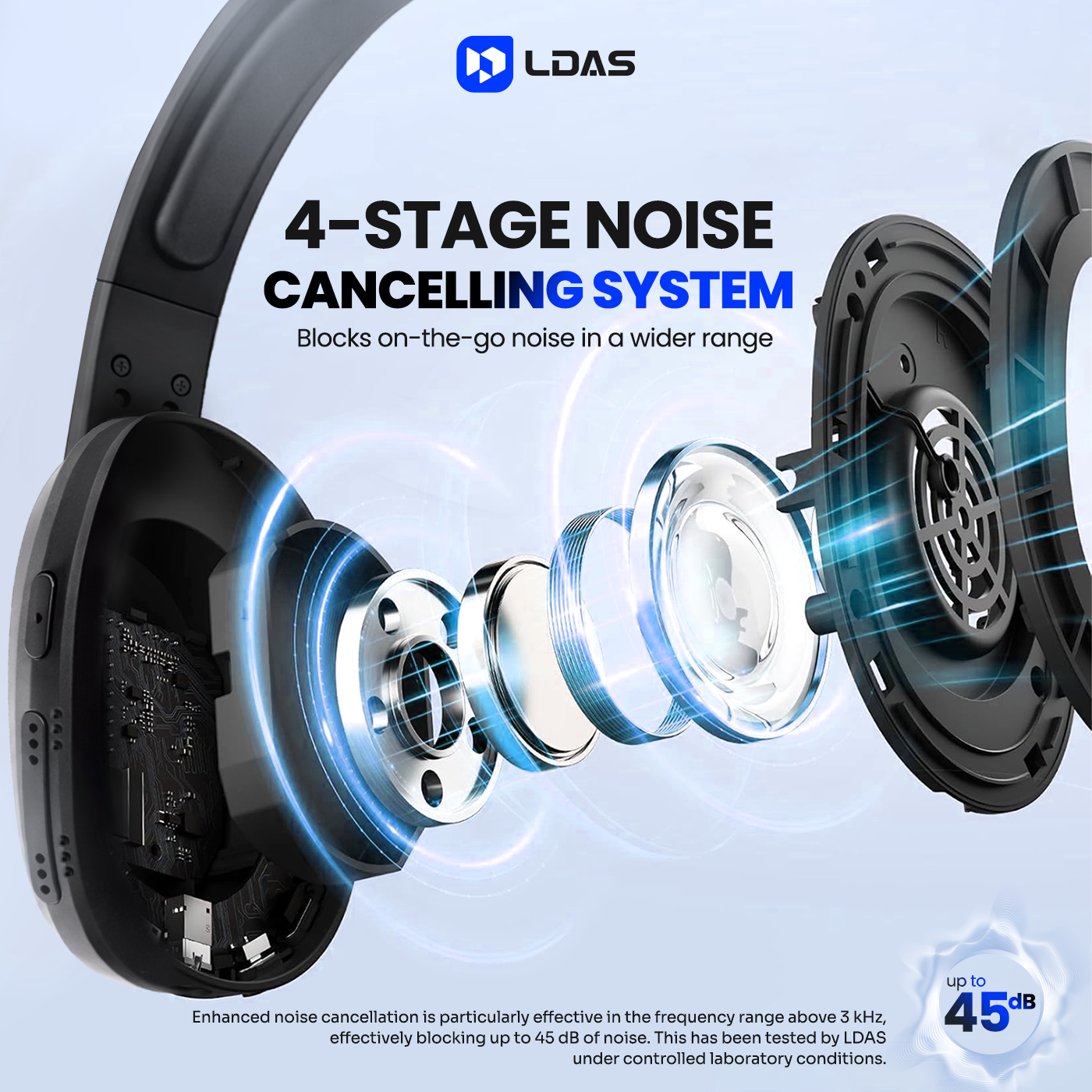
- ENC (Environmental Noise Cancellation) — a second microphone on the headset listens to only the surrounding noise (engine, wind, tires) and subtracts it from the signal going to dispatch. This is the feature that matters for the person on the other end.
- AI noise cancellation — newer headsets layer on a trained model that recognizes voice patterns and suppresses non-voice frequencies in real time. This handles the unpredictable stuff: Jake brakes, air hiss, road grinding.
Note: ENC is not the same as ANC (Active Noise Cancellation). ANC is what you hear — it cancels noise on the playback side. ENC is what they hear — it cleans up the mic side. For trucking, ENC is the one that fixes "say again?" complaints. Don't let a sales page confuse the two. We break down how to choose between models in our 2025 best Bluetooth headsets for Canadian truckers comparison.
Why the LDAS TH11 is built for exactly this problem
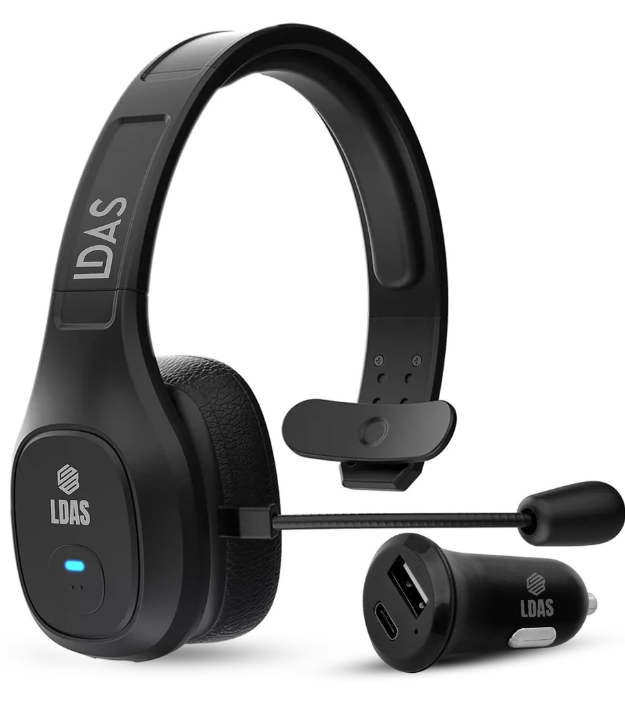
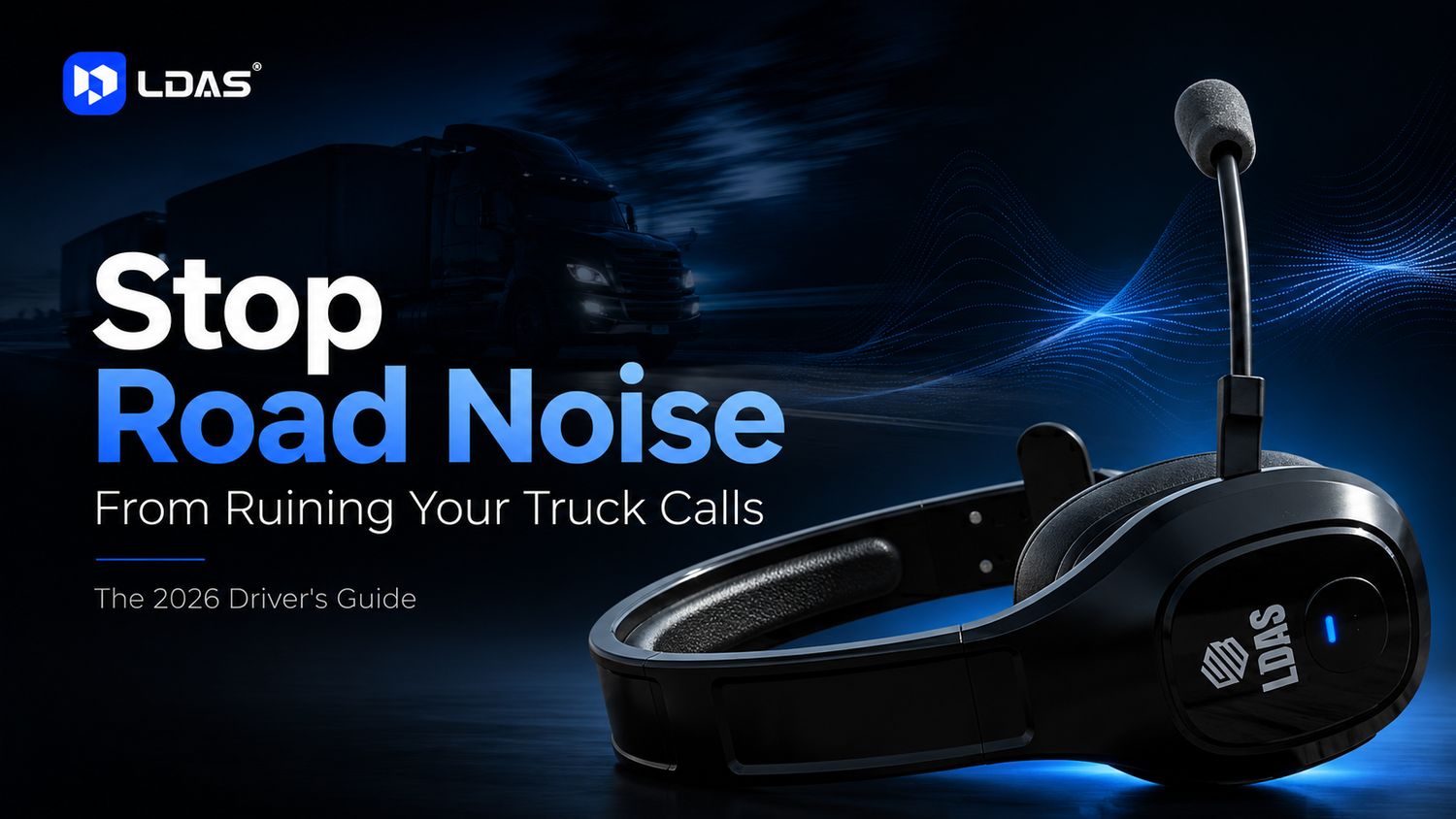
We designed the LDAS TH11 Bluetooth trucker headset specifically around the "dispatch can't hear me" problem. Every spec on it traces back to a real complaint from a Canadian long-haul driver.
- 96% AI environmental noise cancellation. The TH11 strips out engine rumble, wind, and cab chatter so the person on the other end hears your voice — not your truck.
- Bluetooth 5.2 with ENC dual mics. Stable wireless connection plus active noise rejection at the mic capsule itself.
- Boom mic positioned near your mouth. The single most important physical fix for road noise. You can adjust it for left- or right-ear wear.
- Up to 40 hours of talk time and 60 hours of listening. Covers multi-day runs without scrambling for a charger. USB-C fast charging means a 90-minute top-up gets you back to a full shift.
- Wireless range up to 99 feet (30 m). Walk around the trailer, do your pre-trip, take a leak at the truck stop — you stay connected.
- Mono single-ear design. One ear stays open to the road. That's not just safer — in most Canadian provinces, hands-free with one ear free is the legally compliant way to take calls while driving.
- Multipoint pairing. Connect your phone and your tablet or ELD at the same time. No re-pairing every time you swap devices.
- Memory foam earpad and lightweight headband. Designed to wear for a full 11-hour shift without pressure points.
Drivers who switched to the TH11 from a BlueParrott B350-XT have shared what changed in our side-by-side comparison post. If you talk to dispatch all day, the TH11 is the most direct match for that job — see our breakdown of the best headset for dispatch calls truck drivers rely on for the full reasoning.
How to set up your TH11 for maximum noise rejection
Out of the box, the TH11 is good. Set up correctly, it's borderline studio-quality on the receiving end. Here's the dialed-in setup we recommend:
- Position the boom mic two finger-widths from the corner of your mouth. Closer is not better — too close and you'll get plosives ("p" and "b" pops). Two fingers is the sweet spot.
- Wear it on the side away from your driver window. If you ever crack the window, the open ear takes the wind hit, not the mic.
- Open your phone's Bluetooth menu and disable your truck's built-in Bluetooth audio device. Make the TH11 the only Bluetooth output for calls. Otherwise the phone will sometimes route audio to the cab system and you'll wonder why the new headset "isn't working."
- Update the firmware before your first long run. Use the included USB-C cable and follow the QR code in the instruction manual.
- If you sleep with windows cracked or the bunk vent open, throw a foam windscreen on the boom mic. Cheap insurance against wind buffeting.
- For dispatch calls in heavy weather, drop the HVAC to fan speed 1 for the duration of the call. The TH11 will handle the rest.
For a deeper teardown of fit, controls, and multi-device pairing, see our full LDAS TH11 review and "who it's best for" guide.
Is a Bluetooth headset legal while driving a truck?
Short answer: in almost every Canadian province and U.S. state, yes — as long as it's hands-free and you're not physically holding a phone.
In Ontario, the Ministry of Transportation explicitly allows the use of hands-free wireless communication devices with an earpiece, headset, or Bluetooth, as long as you're not holding the device. The full rules are on the official Ontario.ca distracted driving page.
For commercial drivers operating across the U.S. border, the FMCSA prohibits CMV drivers from holding a mobile device or dialing more than a single button — but explicitly allows hands-free headsets used with a phone in close proximity. The official rule is here: FMCSA Mobile Phone Restrictions Fact Sheet.
This is why a mono single-ear Bluetooth headset like the TH11 matters: it keeps one ear open to sirens and traffic, leaves both hands on the wheel, and lets you press a single button to answer. That's the compliant setup for commercial drivers across most of North America. Always confirm with your provincial or state law and your carrier's internal policy.
What changes when you switch
Drivers who replace their factory Bluetooth or earbuds with a dedicated trucker headset usually notice the same three things within the first week:
- Calls finish faster. No more repeating the load number three times.
- Voice fatigue drops. You stop having to shout over the cab. End-of-shift sore throat goes away.
- Battery anxiety disappears. A 40-hour talk-time headset means you charge it on your reset, not every night at the truck stop.
One TH11 customer put it this way: "I drove Alberta to Ontario without a single recharge. Dispatch could hear me like I was sitting in an office." That's the bar.
If you're running a fleet rather than driving solo, the same gear pays back even faster — fewer dropped calls means fewer mis-pickups and less radio time. See our trucker and fleet headset overview for bulk options.
Frequently asked questions
What is the best Bluetooth headset for stopping road noise on truck calls?
For most Canadian and U.S. long-haul drivers, a mono boom-mic headset with environmental noise cancellation (ENC) is the right choice. The LDAS TH11 is purpose-built for this: 96% AI noise cancellation, Bluetooth 5.2 with dual ENC mics, a boom mic that positions near your mouth, and up to 40 hours of talk time per charge.
Does noise cancellation work with the windows down?
Yes, but with limits. ENC and AI noise cancellation can handle a moderate amount of open-window wind, and a boom mic position near your mouth helps a lot. For best results on important calls, roll windows up while you talk. If you regularly run with windows cracked, add a foam windscreen to the mic.
Are Bluetooth headsets legal to use while driving in Canada?
In most Canadian provinces, hands-free Bluetooth headsets are legal for commercial drivers as long as one ear is uncovered and you aren't physically holding the device. Mono single-ear headsets like the TH11 are specifically designed for this. See the official Ontario distracted driving rules for the Ontario specifics, and check your provincial regulations and carrier policy.
How long does the TH11 battery last on a full shift?
The LDAS TH11 is rated for up to 40 hours of talk time and up to 60 hours of listening time on a single charge. For a typical 11-hour driving shift with a mix of calls, music, and standby, most drivers go 3–4 days between charges. A full charge takes about 1.5–2 hours over USB-C.
Will the TH11 pair with my ELD and my phone at the same time?
Yes. The TH11 supports multipoint Bluetooth pairing, which means you can connect your phone and a second device — tablet, ELD, or laptop — simultaneously. Calls and audio route automatically, so you don't have to re-pair every time you switch devices.
Why does my factory truck Bluetooth sound worse than a $50 headset?
Because the truck's built-in mic is mounted 2–3 feet from your mouth, uses a single omnidirectional capsule, and has no environmental noise cancellation. A dedicated headset puts the mic within an inch of your mouth and adds active noise rejection. Physics does most of the work — the mic distance alone is the biggest factor.
Will a noise-cancelling headset block out sirens or horns I need to hear?
The TH11 is a mono single-ear design specifically so one ear stays open to the outside world. You'll hear sirens, horns, and lane-change alerts normally. Only the ear with the headset has audio playing into it.
Is the TH11 better than the BlueParrott B350-XT?
For most users in noisy cab environments, drivers prefer the TH11 for its noise cancellation, comfort over long shifts, and longer battery life. We did a full side-by-side here: TH11 vs BlueParrott B350-XT.
The bottom line
Road noise on truck calls is fixable. Most of the fix is just putting the microphone in the right place — close to your mouth, with proper noise rejection. Your truck's factory Bluetooth can't do that. A dedicated trucker headset can.
If you're tired of repeating yourself to dispatch, the LDAS TH11 Bluetooth Trucker Headset is engineered for this exact problem. 96% AI noise cancellation. Up to 40 hours of talk time. Boom mic. Mono design. Built for Canadian long-haul drivers and backed by LDAS, a Canadian brand.
Stop repeating yourself. Make every call count.