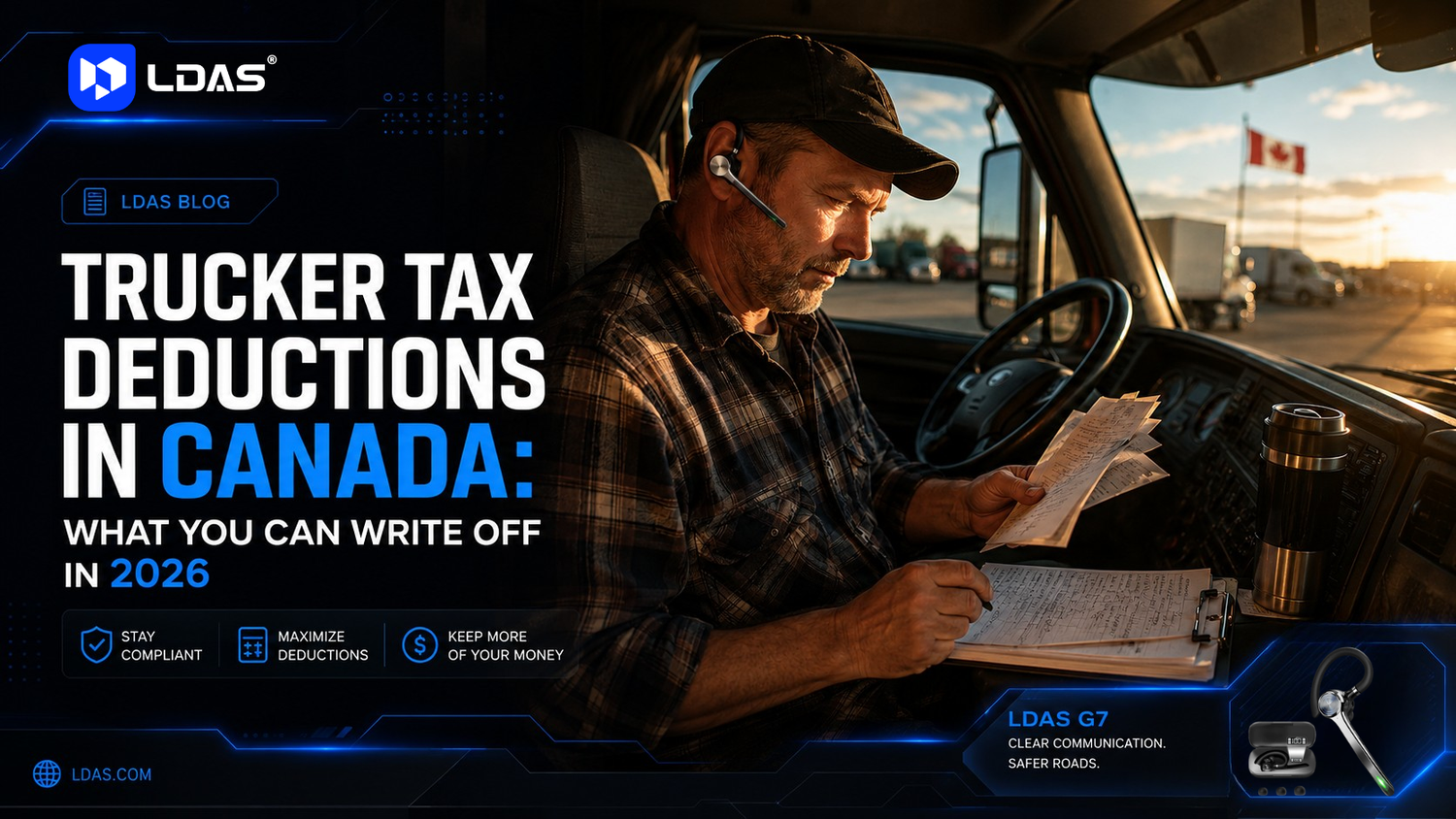
Every spring, thousands of Canadian truck drivers hand more money to the CRA than they actually owe. Not on purpose — just because no one ever told them what they were allowed to claim. Between long hauls, fuel stops, and the paperwork that piles up on the road, taxes are the last thing you want to think about. But a few hours of organized record-keeping can put real money back in your pocket.
This guide walks through the main deductions available to Canadian truckers in 2026 — meals, lodging, equipment, devices, and the everyday work gear you rely on every shift. Whether you’re a company driver with a T4 or an owner-operator running your own numbers, knowing these categories is the difference between guessing and keeping what’s rightfully yours.
One important note up front: this is general information, not tax advice. Rules change, every driver’s situation is different, and the CRA expects accuracy. Always confirm your specific claims with a qualified tax professional before you file — more on that at the end.
First, Know Which Kind of Driver You Are
Before you claim a single dollar, you need to know how the CRA sees you, because it changes almost everything about how you file.
Company drivers (employees) receive a T4 slip. You claim work-related costs as employment expenses, and most of what you can deduct flows through a few specific forms (covered below). The catch: your employer generally has to confirm, in writing, that you were required to pay these costs as a condition of your job. The CRA explains the employee-vs-self-employed distinction in detail in its guide RC4110, Employee or Self-Employed?
Owner-operators (self-employed) run a business. You report business income and subtract business expenses — fuel, maintenance, insurance, lease payments, and more — using the CRA’s self-employment rules in Guide T4002 and Form T2125. You get far more room to deduct, but also far more responsibility to keep clean books.
If you do both, or you’re an incorporated driver, the rules layer on top of each other. That’s exactly when a tax pro earns their fee.
1. Meals and Lodging (the TL2 — usually your biggest claim)
For long-haul drivers, meals are typically the single largest deduction, claimed using Form TL2, Claim for Meals and Lodging Expenses.
Here’s what makes it so valuable. Most workers who travel for their job can deduct only 50% of their meal costs. Long-haul truck drivers can deduct 80%. To qualify as long-haul under CRA rules, you generally need to be driving a truck that transports goods at least 160 kilometres from your employer’s base, and be away from your home municipality for at least 24 hours.

You have two ways to calculate the meal claim:
- Simplified method: Claim a flat rate per meal — $23 per meal, up to three meals a day ($69/day) — without keeping every receipt. You still need a detailed trip log. The CRA confirms the current flat rate on its Meal and vehicle rates page. For U.S. trips, the same $23 figure applies in U.S. dollars, then gets converted to Canadian funds.
- Detailed method: Add up your actual meal receipts and claim 80% of the total. This wins when you genuinely spend more than the simplified rate — but you must keep every receipt.
Quick example: 200 eligible meals at the simplified rate is 200 × $23 = $4,600. At the 80% long-haul rate, that’s roughly $3,680 off your income. Numbers like that are why the TL2 matters.
Lodging is claimed separately at full cost — keep those receipts. If you sleep in your cab, you can also claim related costs like showers. Meal and lodging claims land on line 22900 of your return, and for company drivers your employer must complete Part 3 of the TL2.
Tip: before you choose a method, calculate your claim both ways. Plenty of drivers default to simplified when their real spending would have produced a bigger detailed claim — or the reverse.
2. Equipment and Tools
The gear you buy to do your job can often be deducted, but how depends on whether you’re an employee or an owner-operator.

Owner-operators can generally deduct the cost of business equipment. Smaller items are usually expensed in the year you buy them, while bigger-ticket assets are deducted over several years through Capital Cost Allowance (CCA) — the CRA’s method for spreading the cost of things like your truck or major hardware across their useful life.
Company drivers have a narrower path. The CRA limits which tools and supplies employees can deduct, and there are specific provisions (such as the tradesperson’s tools deduction) with their own rules and dollar limits. The general principle: if your employer required you to buy it to do your job and didn’t reimburse you, it may be deductible — but get that confirmed.
Either way, the rule of thumb is simple: keep the receipt for anything you buy to do your job. A receipt you saved is a deduction you can defend. A receipt you tossed is money gone.
3. Devices: Cell Phone, Data, and Communication Tools
Your phone is a working tool, not a luxury — dispatch, navigation, load boards, electronic logs, and customer calls all run through it. The CRA recognizes this, with conditions.
You can typically claim the business-use portion of your cell phone and data plan. If 70% of your usage is work-related, roughly 70% of the bill may be deductible. The cost of the phone itself can also be claimed — expensed or depreciated depending on cost and filing status. Owner-operators generally have more flexibility; employees face tighter limits and need employer confirmation via the T2200 form.

The key, again, is records: a reasonable, honest split between business and personal use that you can back up if the CRA asks.
4. Work Gear You Use Every Shift — Like Your Headset
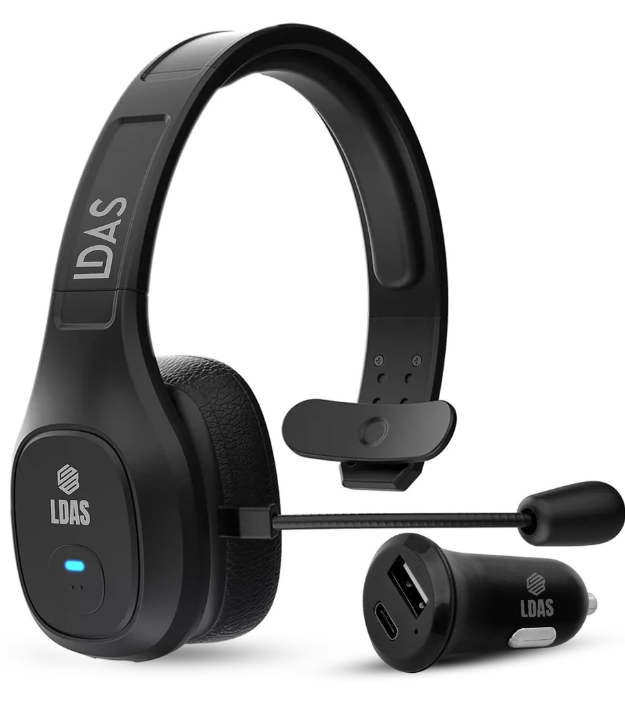
Here’s a category drivers routinely overlook: the smaller equipment that makes the job possible day to day. A quality Bluetooth headset is a clear example. If you’re taking dispatch calls, coordinating loads, and staying hands-free and legal behind the wheel, a headset isn’t optional — it’s required equipment for doing your job safely and within the law. (Provincial distracted-driving rules, like Ontario’s, are exactly why hands-free gear matters.)
That work-tool status is what can make it deductible. Like other equipment and devices, it depends on your situation: owner-operators can generally claim work gear as a business expense, while company drivers fall under the stricter employee rules. As always, confirm with your accountant whether your headset and similar gear qualify in your case.

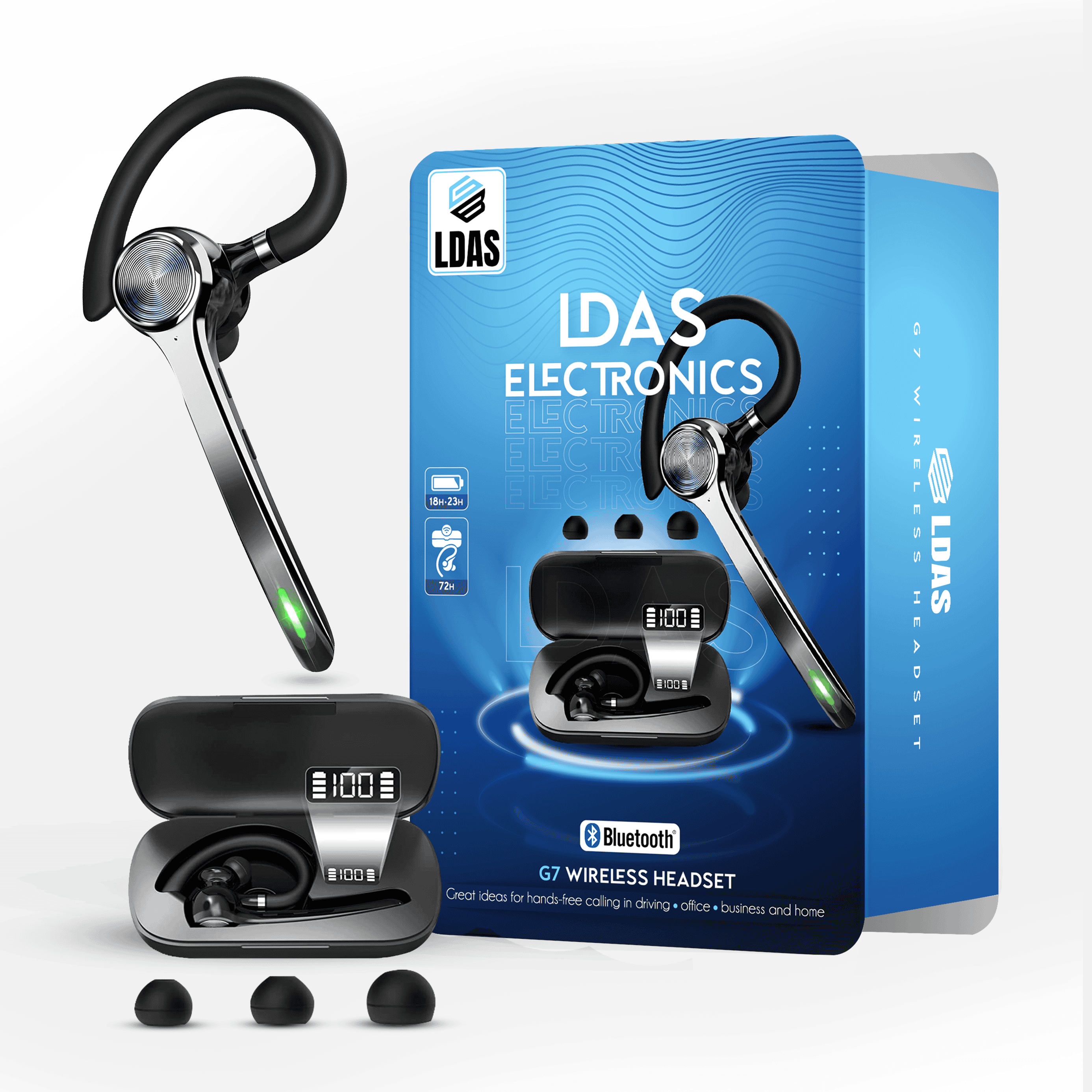
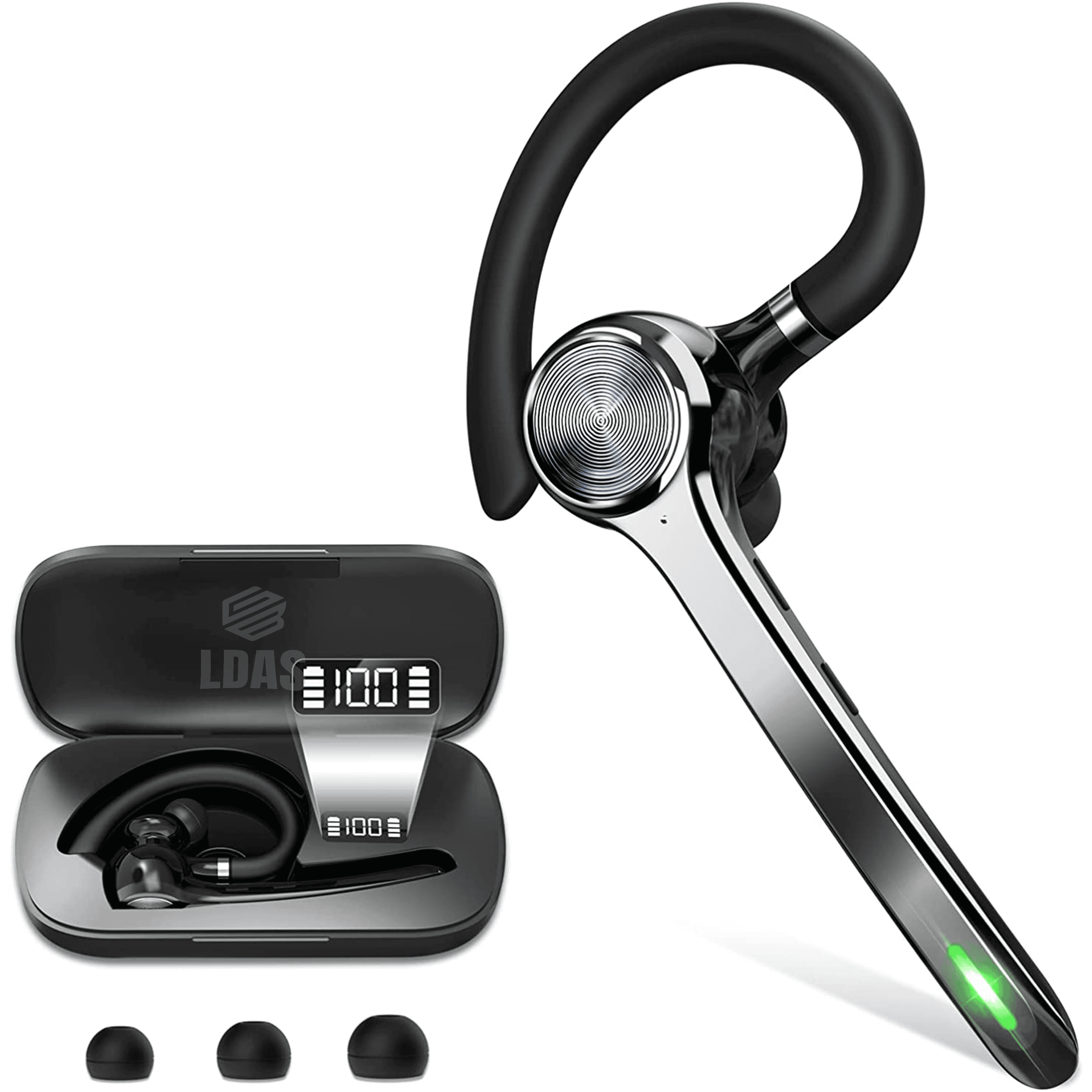
This is where the LDAS G7 makes a lot of sense. At well under CA$70, it’s an affordable, purpose-built work tool: 96% AI noise cancellation that cuts engine and wind roar so dispatch hears you clearly, up to 72 hours of total use with its charging case, a lightweight build for all-day wear, and stable Bluetooth that lets your phone stay parked in the cab. It’s backed by a 365-day warranty — and as a Proudly Canadian brand, LDAS keeps your receipt and support local, which makes record-keeping that much simpler at tax time.
A tool that helps you work safely, keeps your calls clear, and may be a deductible expense? That’s the kind of purchase that pays you back twice.
Shop the LDAS G7 → affordable, driver-built, 365-day warranty
5. Other Deductions Worth Knowing
- Fuel, maintenance, and repairs — major deductions for owner-operators. Track every fill-up and shop visit.
- Truck insurance and licensing — business insurance, plates, and permits tied to operating your truck.
- Lease or financing costs — if you lease or finance your truck, those costs may be deductible (with limits).
- Association and union dues — professional and union fees related to your work.
- Parking, tolls, and scale fees — small individually, meaningful over a full year of hauls.
-
GST/HST rebate (employees): if you deduct employment expenses and your employer is GST/HST-registered, you may be able to recover some of the sales tax you paid using Form GST370, claimed on line 45700.

The Forms That Tie It Together
For company drivers, a handful of CRA forms do the heavy lifting:
- T2200 — Declaration of Conditions of Employment: your employer signs this to confirm you were required to pay certain expenses. Keep it on file; you don’t mail it in.
- T777 — Statement of Employment Expenses: where you total up your employment expenses, carried to line 22900.
- TL2 — Claim for Meals and Lodging Expenses: your meals-and-lodging workhorse, covered above.
- GST370 — Employee and Partner GST/HST Rebate Application: for recovering eligible sales tax.
The CRA’s full T4044 Employment Expenses guide pulls all of these together in one place. Owner-operators report income and expenses as a business instead, which is its own process — another reason professional help is worth it once you’re self-employed.
Record-Keeping: The Habit That Saves You Money
Every deduction in this guide depends on one thing: proof. The CRA can ask you to back up your claims, and “I’m pretty sure I spent that” won’t cut it. Build these habits now and next tax season gets dramatically easier:
- Keep a running trip log with dates, destinations, distances, and hours away.
- Save receipts — photograph them in the cab so a faded paper slip doesn’t cost you a claim.
- Separate business and personal spending; a dedicated card for work purchases makes this painless.
- Hold onto records for at least six years, the CRA’s standard window.
Confirm With a Tax Professional Before You File
Tax rules are detailed, they change year to year, and your exact situation — employee vs. owner-operator, province, U.S. miles, incorporation — changes what you can claim and how. This article is general information, not personalized tax advice. Before you file your 2026 return, sit down with a qualified accountant or tax professional who knows trucking. The right advice usually pays for itself many times over, and it keeps you onside with the CRA.
Drive smart, keep your records clean, and claim everything you’re entitled to — right down to the headset on your ear.
Related reading from LDAS:
- Best Bluetooth Headsets for Truckers in Canada: TH11, G7, G10 & F910 Review
- Best Headset for Truck Drivers Who Talk to Dispatch All Day
- Best Wireless Trucker Headset Right Now: Clear Calls, Long Battery, All-Day Comfort
- LDAS G7 Bluetooth Headset — product page
Helpful official resources (CRA & government):
- CRA — Form TL2, Claim for Meals and Lodging Expenses
- CRA — Meal and Vehicle Rates Used to Calculate Travel Expenses
- CRA — T4044 Employment Expenses Guide
- CRA — Form T2200, Declaration of Conditions of Employment
- CRA — Line 22900, Other Employment Expenses
- CRA — Guide T4002, Self-Employed Business Income (for owner-operators)
- CRA — RC4110, Employee or Self-Employed?